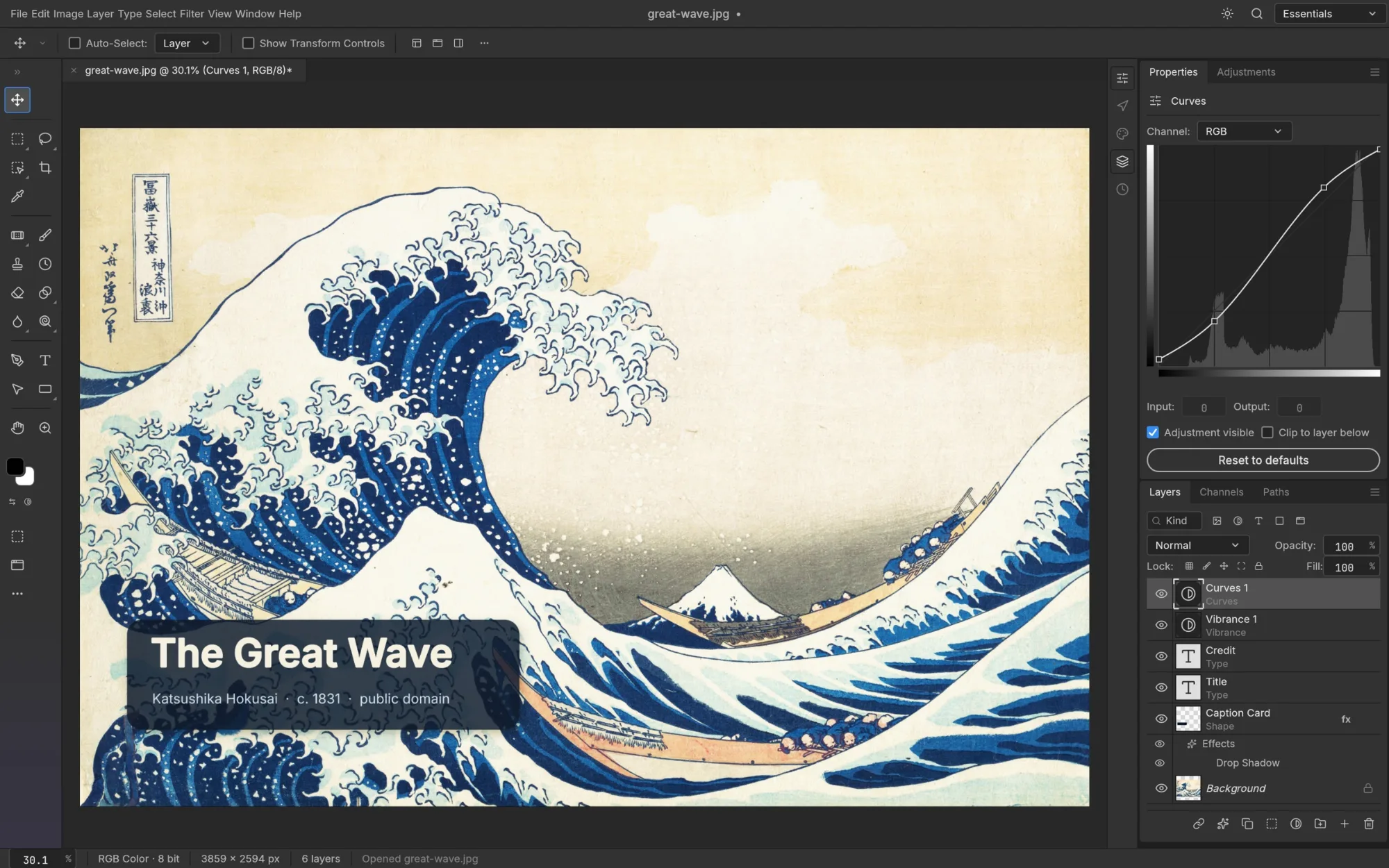
If you had told me a year ago that a small group of open-source developers was quietly rebuilding the entire Adobe Creative Cloud from scratch—in pure Rust—I would have called you crazy. Yet, here we are.
Over the last few days, I've been diving deep into the GitHub repositories of ArtCraft (formerly listed under the handle
storytold). What I found isn't just another neat open-source project; it’s an absolute masterclass in software engineering that threatens to disrupt the subscription-heavy creative software industry.Here’s a deep dive into the "Craft" suite, what it feels like to use these tools, and why this might be the most exciting open-source initiative on the internet right now.
The Ambition is Staggering
Let's put this into perspective. Adobe Photoshop has been in development since 1990. It is a massive, sprawling beast of a codebase. The folks at ArtCraft looked at that and said, "Yeah, we can rebuild that. And we'll do it in Rust."
They aren't stopping at Photoshop, either. Their GitHub page reads like a hit list of every piece of industry-standard creative software:
-
Photocraft: A clean-room reimplementation of Photoshop. (Already sitting at over 43,000 stars on GitHub, which is massive).
-
Filmcraft: A Premiere Pro alternative.
-
Lightcraft: Their answer to Adobe Lightroom.
-
Vectorcraft: Aiming right at Adobe Illustrator.
-
Pdfcraft & Soundcraft: Taking on Acrobat and Avid Pro Tools, respectively.
They even have Wordcraft, an open-source recreation of Microsoft Word, just for good measure.
Why Rust Matters
You might be wondering why it matters that these are written in "pure Rust." If you aren't a developer, all you need to know is this: Rust is incredibly fast and incredibly safe. It forces developers to write memory-efficient code that is highly resistant to crashing.
When you boot up Photocraft, the first thing you notice is the speed. There's no splash screen holding you hostage for 45 seconds while it loads thousands of plugins you'll never use. It just opens. The UI is snappy, memory usage is a fraction of what Adobe requires, and operations that usually make my laptop fan sound like a jet engine happen in near silence.
Hands-On with the Apps
While the suite is heavily in development, the foundational work is mind-blowing.
Photocraft is clearly the crown jewel right now. If you have muscle memory built up from years of using Photoshop, you will feel right at home. The layout, the layers panel, the brush mechanics—they’ve meticulously recreated the workflow so you don’t have to relearn how to design. It's not 100% feature-complete (you won't find Adobe's proprietary AI generation tools here), but for 95% of graphic design and photo manipulation tasks, it is incredibly capable.
Filmcraft and Lightcraft are showing massive promise. Video editing is notoriously difficult to get right in open-source software (just ask anyone who has wrestled with older versions of Kdenlive or Shotcut), but Filmcraft handles timeline scrubbing and rendering with a fluidity that I rarely see outside of DaVinci Resolve or Final Cut.
Managing all of this is the Craft Launcher, a lightweight central hub that acts as a stand-in for the Adobe Creative Cloud desktop app. It handles updates and app management without bogging down your system resources.
The Verdict
As a creative professional, the current state of software is frustrating. We are locked into expensive monthly subscriptions for bloated software that rarely feels like it's innovating.
The ArtCraft team (
storytold) is building the escape hatch.These aren't just toys or weekend projects. By building clean-room reimplementations (meaning they are engineered from the ground up without using any of the original companies' proprietary code), they are creating a legal, open, and blisteringly fast alternative to the industry monopolies.
Should you switch today? If you rely heavily on cloud-syncing, proprietary Adobe AI, or deep AfterEffects dynamic linking, maybe not just yet. But you should absolutely go download the Craft Launcher and try Photocraft.
It is a breath of fresh air to use creative tools built by makers, for makers—without a paywall in sight. The future of creative software is open source, and right now, that future is being written in Rust.